


Helena Gebremichael, MS
October 27, 2026
Flaxseed has become a popular addition to healthy diets, with news outlets and social media calling it a great way to increase daily fiber intake. Packed with nutrients, flaxseed can be added to a variety of foods to support heart health and brain function, and it may lower the chances of developing some cancers. Here’s what you need to know.
Flaxseed comes from the flax plant and is rich in fiber, omega-3 fatty acids, and antioxidants.1 It’s a nutritious, naturally gluten-free option. However, people with wheat and gluten sensitivity or celiac disease should choose flaxseed labeled allergy-free or gluten-free to avoid possible cross-contamination.
You can find it as whole seeds, ground seeds (flaxseed meal), or oil, which comes in liquid or pill form. The most nutritious addition to your diet is ground flaxseed.
Why is it important?
Fiber
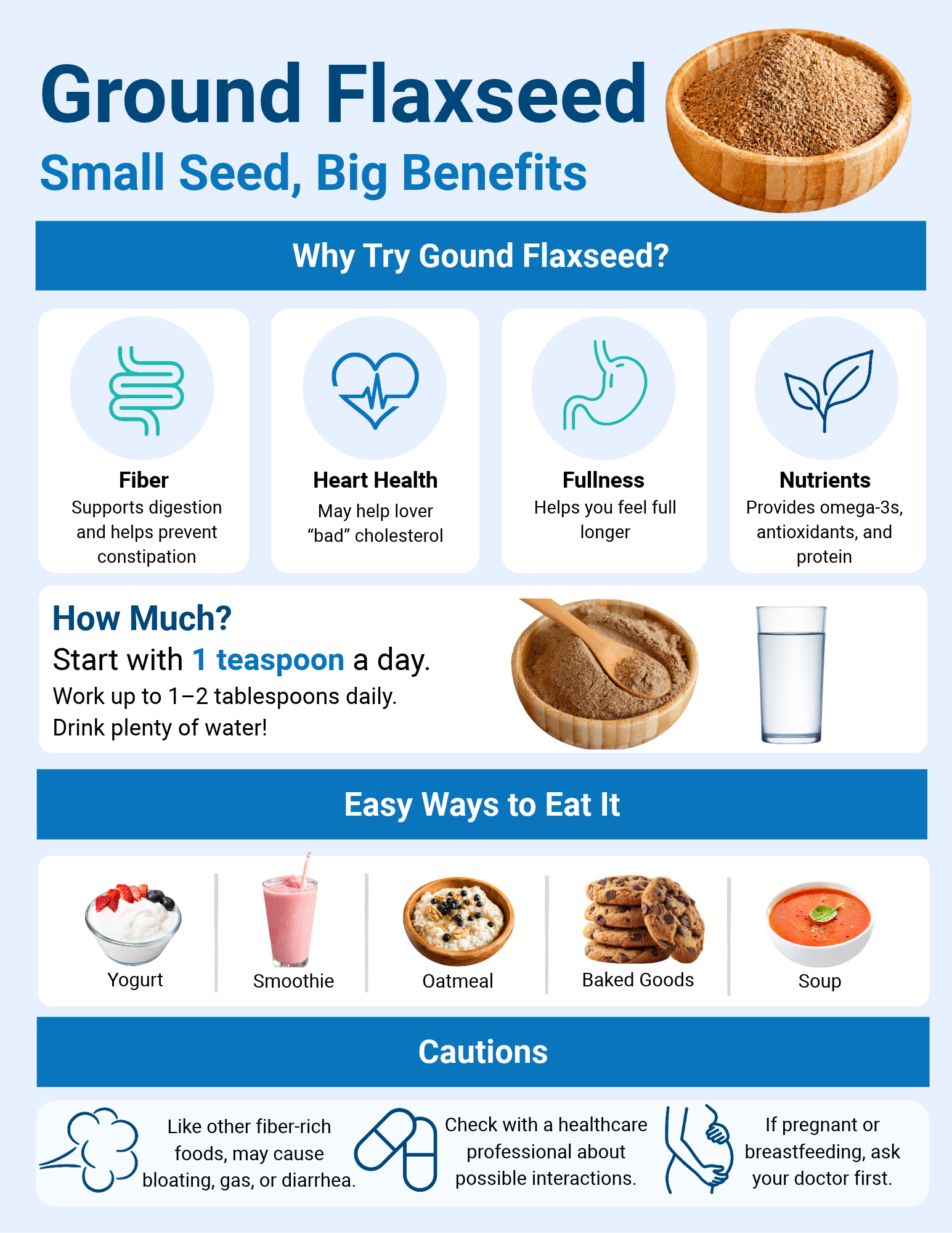
One of flaxseed’s main benefits is its fiber content. Fiber supports digestion and helps prevent constipation. It can also help lower “bad” cholesterol and blood sugar levels. Fiber can also help prevent overeating by helping you feel full longer.2
Experts recommend that for every 1,000 calories you eat each day, you should aim to consume about 14 grams of fiber.2 Two tablespoons of ground flaxseed provide 4 grams of fiber (and 3 grams of protein).
 Omega-3 fatty acids, Vitamins, and Minerals
Flaxseed also contains omega-3s, often called “good” fats, that help build and maintain healthy cells and is good for your heart.
Experts believe omega-3s could help with inflammatory bowel disease, autoimmune diseases, and depression, and support bone health.3 However, more research is needed to confirm whether the omega-3s found in flaxseed provide these benefits.
Flaxseed also provides essential vitamins and minerals, including thiamine (vitamin B1), copper, magnesium, and phosphorus. Thiamine helps the body convert nutrients into energy and supports nerve function, while copper contributes to energy production. Magnesium supports several bodily processes (and is currently popular to help with insomnia), and phosphorus is essential for maintaining healthy bones and repairing body tissues.4
Lignans
Flaxseed is also high in lignans, natural antioxidants that may lower the chances of developing heart disease, type 2 diabetes, and cancers of the breast, prostate, and colon.5 You may have never heard of lignans, but there is growing interest in how they benefit our health and flaxseed is an especially excellent source.
Where can I buy flaxseed and how can I add it to food?
You can add ground flaxseed to cereal, baked goods, salads, yogurt, smoothies, and many other foods and drinks. You can even add it to toast. Its mild, nutty flavor often goes unnoticed when mixed with other ingredients.1 It is an easy way to boost the nutritional value of food you already are eating.
As with other foods high in fiber, it’s best to start with a small amount if you haven’t eaten flaxseed before. Gradually increase your intake to 1 to 2 tablespoons per day.1,6 Store ground flaxseed in a sealed container in the refrigerator or freezer to keep it fresh.1
You can find flaxseed at many grocery stores, online, and at some farmers markets. Some states allow people to buy it with SNAP benefits (food stamps) or WIC benefits.
Is it safe for everyone?
Flaxseed is safe for most people, but like other fiber-rich foods, it can cause bloating, gas, or diarrhea, especially when consumed in large amounts. Drink plenty of water, as too little water can worsen constipation.2,4 And like any food, some people are allergic to it.
Flaxseed and flaxseed oil may affect how certain medications work, including:
- Blood thinners (anticoagulant and antiplatelet medicines): Flaxseed may slow blood clotting, increasing the chance of bleeding when combined with these medications.
- Blood pressure and diabetes medications: Flaxseed may lower blood pressure and blood sugar. If you take medications for either condition and regularly eat flaxseed, talk with your doctor about whether your medications need to be adjusted.
- Estrogen-based medications: Flaxseed may interfere with estrogen, making birth control pills and hormone replacement therapy less effective.
The fiber in flaxseed may also affect how the body absorbs medications taken by mouth, so avoid taking them at the same time.
Talk with your healthcare professional about possible medication interactions and the best timing for medications or supplements before adding flaxseed or flaxseed oil to your diet. If you are pregnant or breastfeeding, talk with your doctor before using either.7
The Bottom Line
There are many reasons to add flaxseed to your daily routine. It’s an easy way to improve digestion and improve your health.
References
- Cleveland Clinic. Flaxseed: A little seed with big benefits. Published January 31, 2024. Accessed October 21, 2026. https://health.clevelandclinic.org/flaxseed-little-seed-big-benefits
- Mayo Clinic Staff. Chart of high-fiber foods. Mayo Clinic. Updated December 24, 2025. Accessed October 21, 2026. https://www.mayoclinic.org/healthy-lifestyle/nutrition-and-healthy-eating/in-depth/high-fiber-foods/art-20050948
- National Institutes of Health, National Center for Complementary and Integrative Health. Omega-3 supplements. Updated August 2015. Accessed October 26, 2026. https://files.nccih.nih.gov/s3fs-public/Omega-3_11-30-2015.pdf
- Bjarnadottir A. Flax seeds 101: nutrition facts and health benefits. Healthline. Updated April 10, 2026. Accessed October 21, 2026. https://www.healthline.com/nutrition/foods/flaxseeds
- Linus Pauling Institute. Lignans. Oregon State University. Updated March 2021. Accessed October 21, 2026. https://lpi.oregonstate.edu/mic/dietary-factors/phytochemicals/lignans#food-sources
- Ajmera R, Tan V. 8 health benefits of flaxseed and how to add them to your diet. Healthline. Updated June 16, 2026. Accessed October 21, 2026. https://www.healthline.com/nutrition/benefits-of-flaxseeds
- Mayo Clinic Staff. Flaxseed and flaxseed oil. Mayo Clinic. Updated March 26, 2025. Accessed October 21, 2026. https://www.mayoclinic.org/drugs-supplements-flaxseed-and-flaxseed-oil/art-20366457